Realism in tattooing is older than most accounts suggest. Sailors in the nineteenth century commissioned portraits of loved ones, and prison tattooing in multiple traditions produced recognisable likenesses centuries before the electric machine. The idea of putting realistic depictions on skin is not a late-twentieth-century invention.
Tattoo styles
Tattoo styles are not a fixed system but a set of working conventions — ways of drawing, lining, shading, and composing that have developed over time within different traditions. Some names point to established visual systems with clear rules, while others describe how the tattoo is made or how it looks in terms of tone. There are also practices in which style cannot be separated from cultural meaning and protocol. At the same time, newer labels often emerge from trends and hybridisation, borrowing freely from existing approaches without forming a stable canon.
In practice, “style” serves less as a strict category and more as a shared reference point — helping align expectations between artist and client around form, durability, and intent.

New school
New school is the most maligned of the major tattoo styles. Some of that reputation is earned; some of it comes from a reflex against cartoon imagery in a craft tradition that has come to prefer fine-art references. Either way, the style is also one of the most technically demanding in the tattooing repertoire, and the work of (…)
Neo-traditional
Neo-traditional is in a period of consolidation. The experimental energy of the 2000s and early 2010s has given way to a more established set of conventions, and a recognisable neo-traditional aesthetic now exists that an artist can work inside without feeling they are reinventing anything. This has produced a great deal of competent work (…)
American traditional
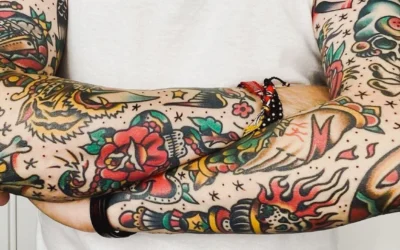
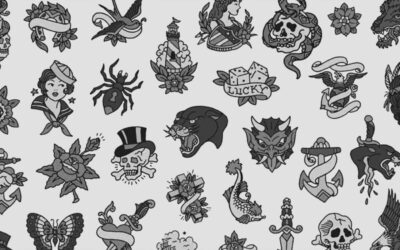
American traditional is a craft tradition in the oldest sense: a body of knowledge passed from one person to the next, refined by working conditions, preserved by repetition, and judged by whether the work still looks right in forty years. The designs that were good in 1935 are the same designs that are good now, for the same reasons.
The List of Styles in Tattooing
Tattoo styles are shared visual rules, methods, and histories. But there is no single, universally accepted taxonomy. Some labels describe an aesthetic, some describe a palette, some are fundamentally technique-based, and some are culture-bound practices where meaning, permission, and protocol are inseparable from the design.