Related Posts


Sailor Jerry – Norman Keith Collins
Sailor Jerry: The Tattooer on Smith Street
Freight trains and Skid Row
Hotel Street
When Collins left the Navy, he settled in Honolulu. His timing was, depending on how you look at it, either terrible or perfect. Within a few years, the Japanese bombed Pearl Harbour, and the Hawaiian Islands became one of the largest military staging grounds in the Pacific.
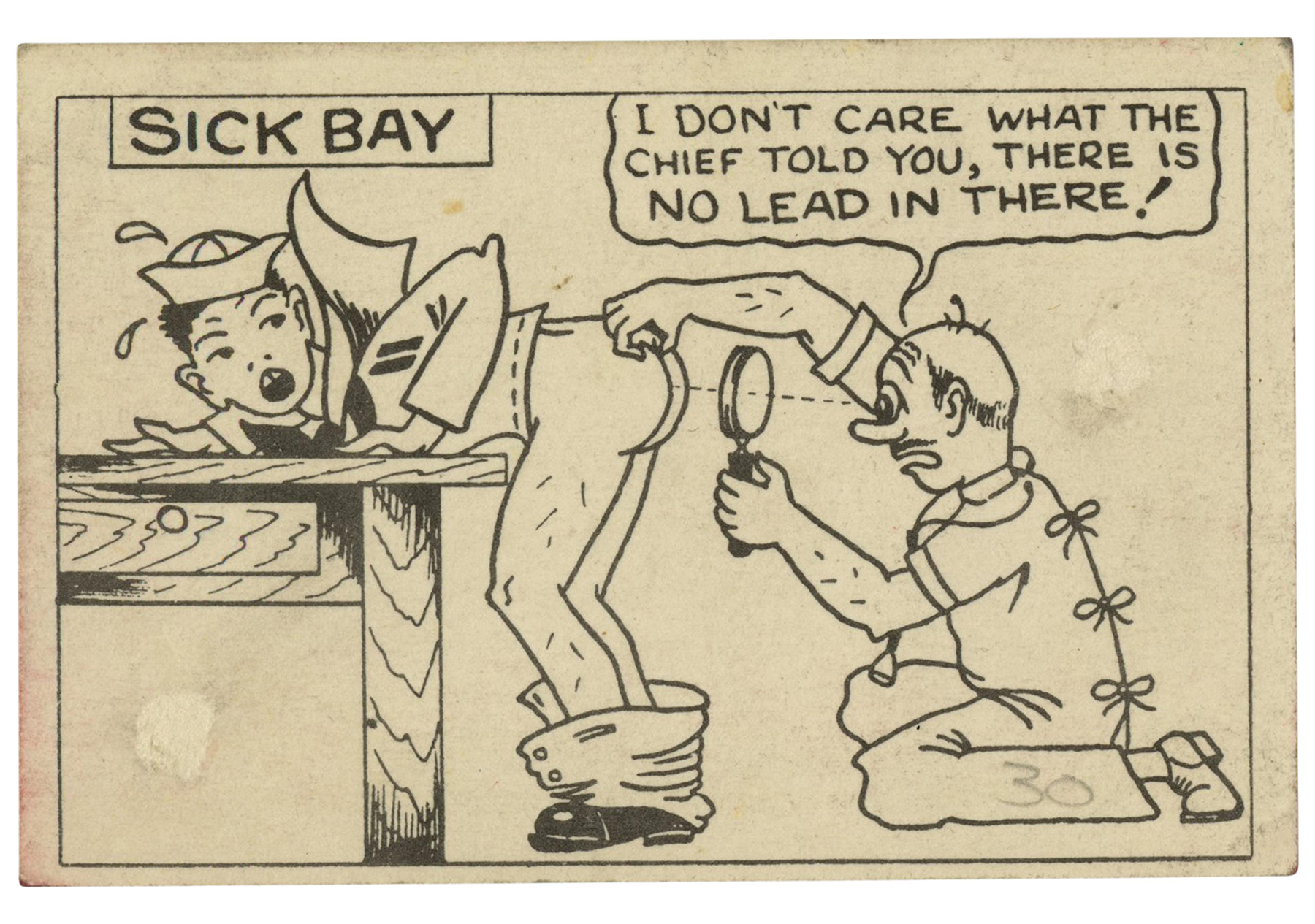
Honolulu’s Hotel Street district — a strip of bars, brothels, and tattoo parlours in Chinatown — became the centre of shore-leave life. During the war, tens of thousands of servicemen cycled through on 48-hour passes. A wartime tour guide’s line, still repeated today, captures the district’s reputation: soldiers and sailors came to Hotel Street “to get stewed, screwed, and tattooed.” Lines for the bars were so long that you had minutes to finish your drink before making room for the next man.
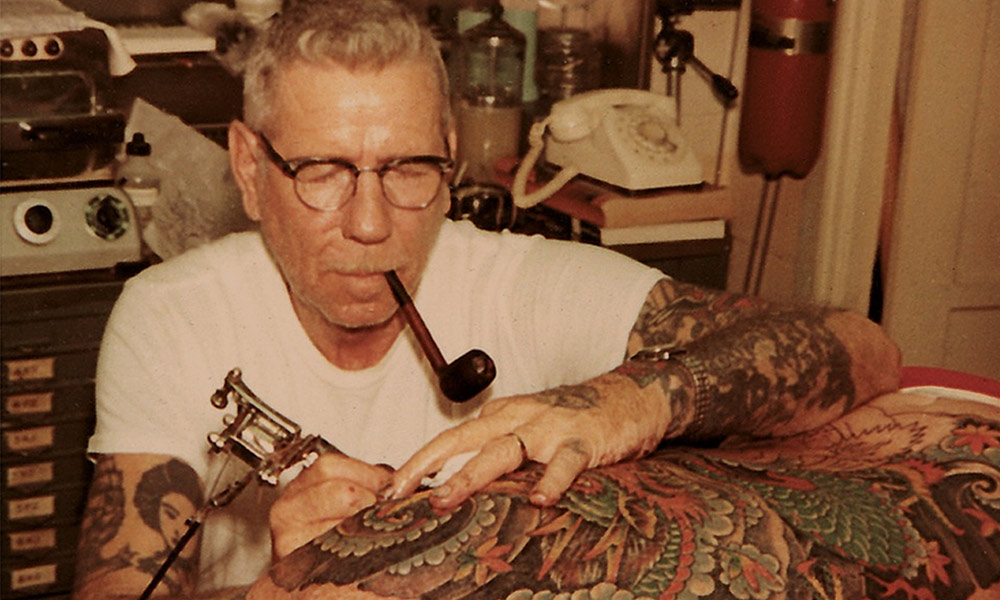
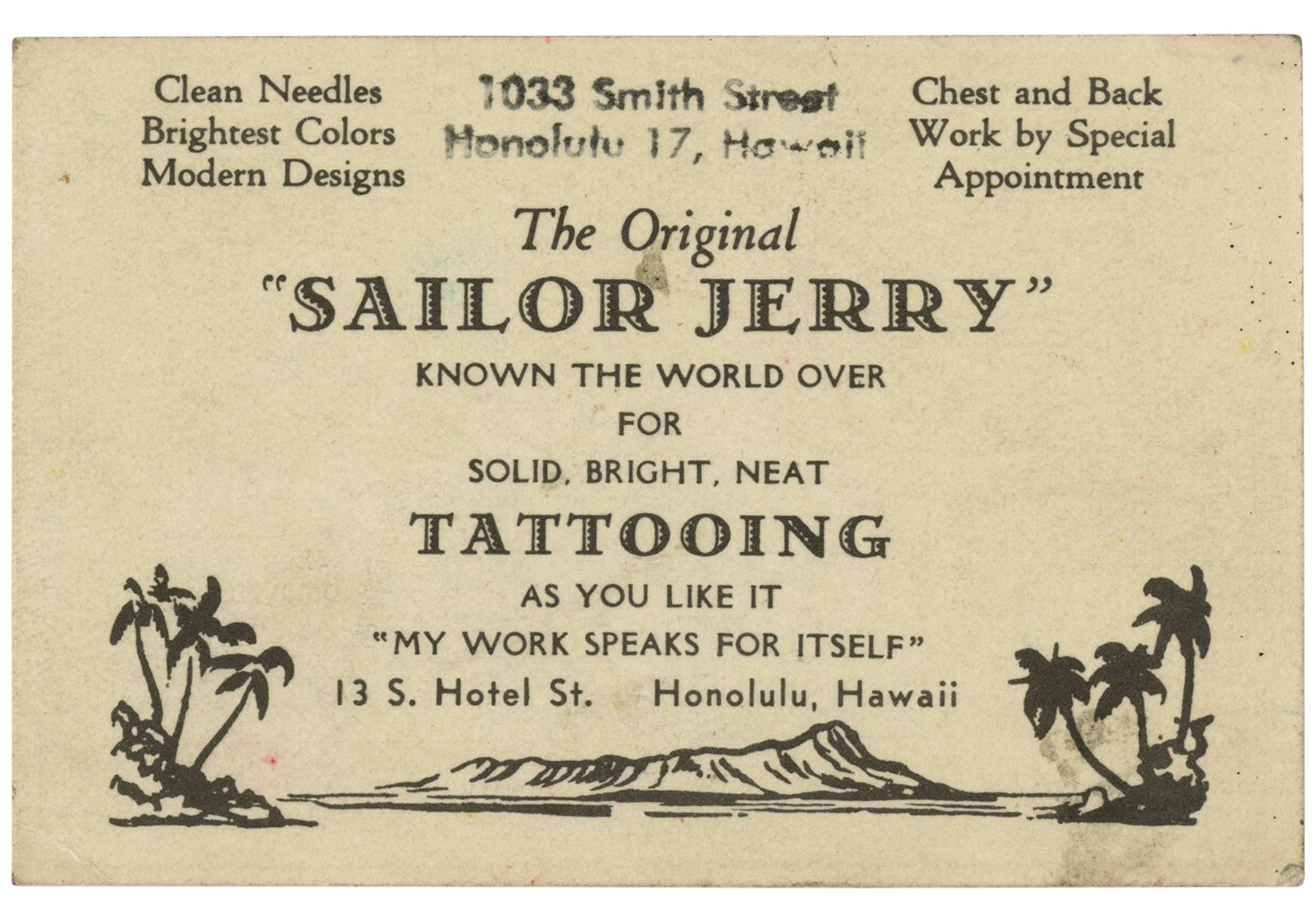
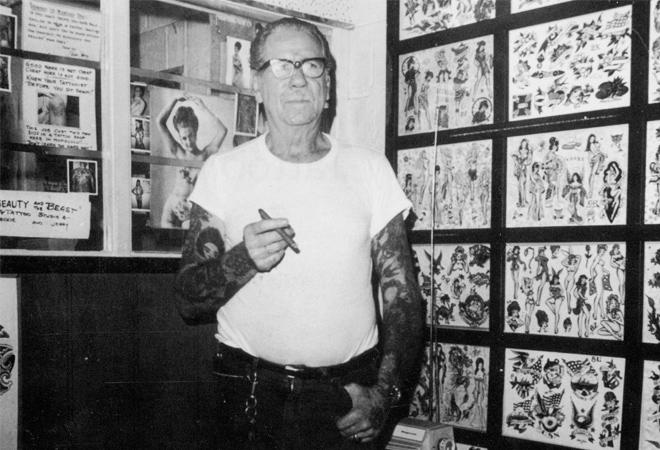
This was Collins’s working environment. He tattooed at several Honolulu locations over the years — 434 South State Street, 150 North Hotel Street, 13 South Hotel Street — before settling into his last shop at 1033 Smith Street, in the heart of Chinatown. A surviving business card from around 1950, documented in an auction catalogue, advertises “Clean Needles,” “Brightest Colours,” and “Modern Designs” at that address. It is one of the few pieces of direct marketing evidence from his practice — a physical artefact showing exactly how he pitched himself to walk-in clients.
Some accounts place him in the Merchant Marines during WWII itself, after being denied reenlistment due to a heart condition. One source describes him opening a joint shop called “Tom & Jerry’s” with a Chinese tattoo artist on Hotel Street. These details appear in compiled histories and interviews rather than official records.
What is documented beyond doubt is that Collins held captain’s papers and, in the 1950s, skippered a tour ship at the Pearl Harbour memorial. He also earned a first-class FCC license, taught himself electronics (which fed directly into his machine-building), and hosted a late-night talk radio show under the name “Old Ironsides.” He played saxophone in a dance band. He held conservative political views and resented paying taxes. He was, by all accounts, stubborn and opinionated, with sharp views on the tattoo industry and everybody in it.
The Flash System
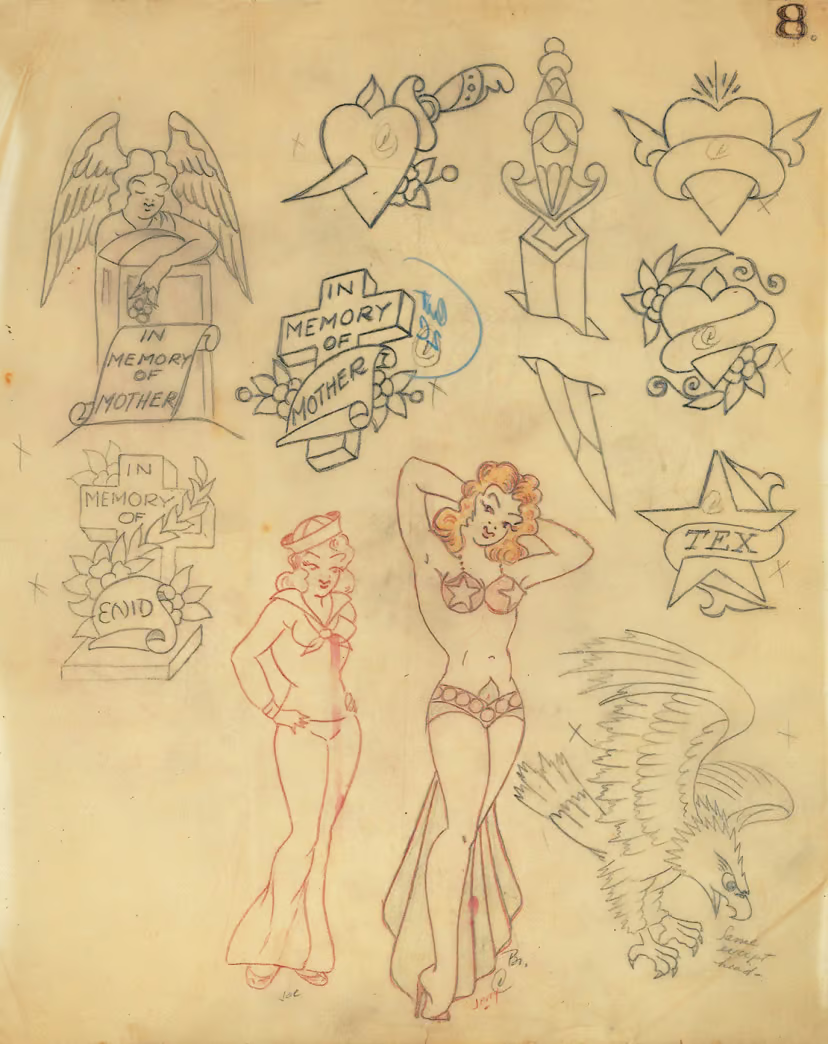
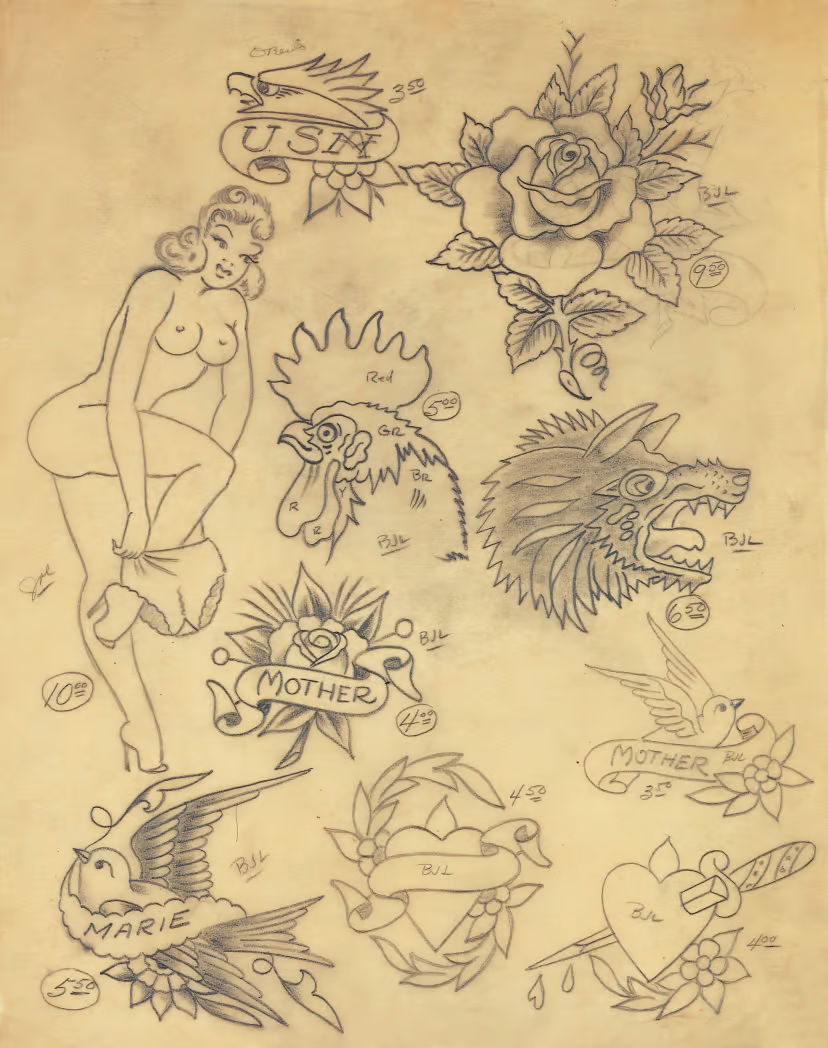
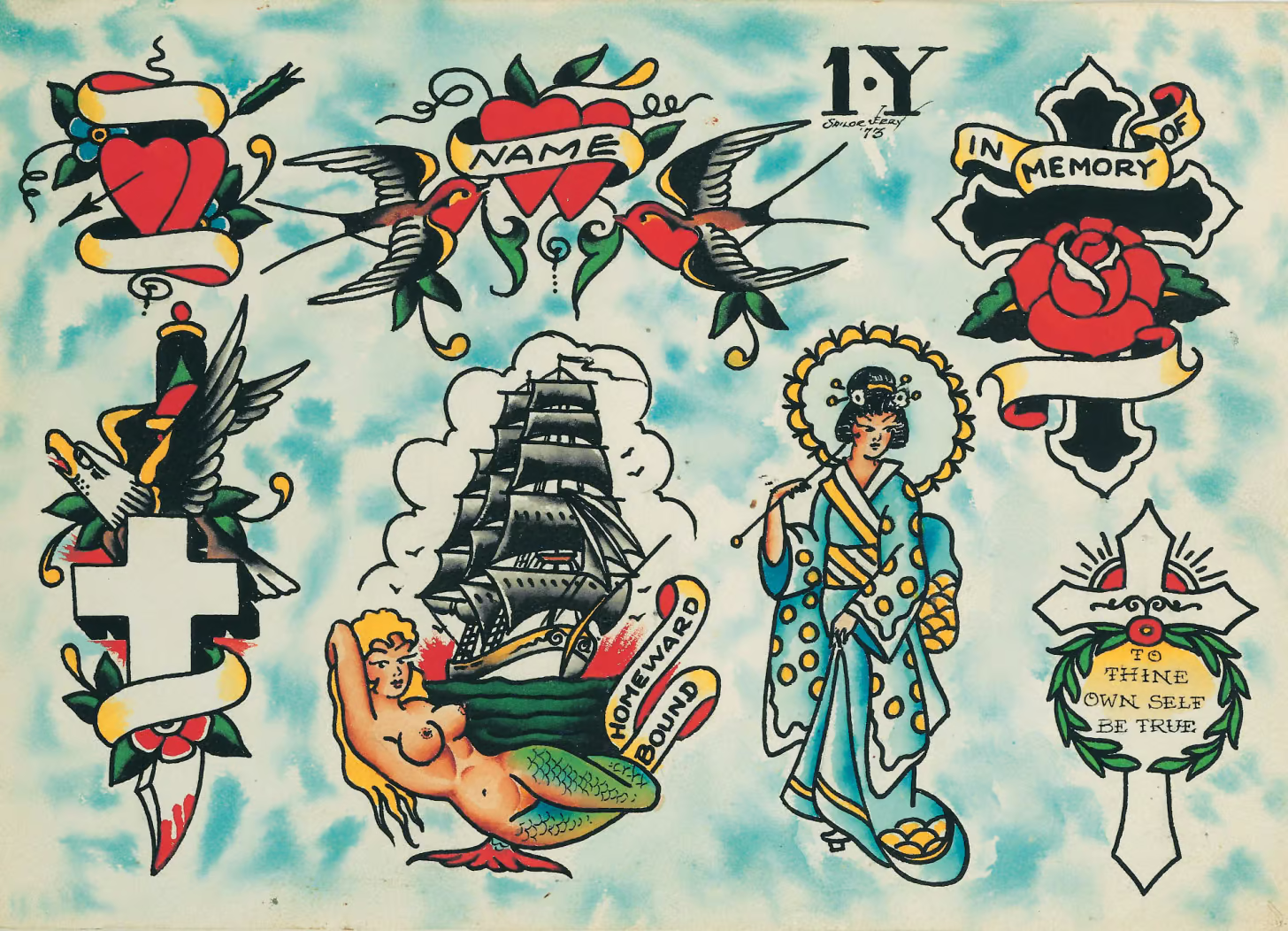
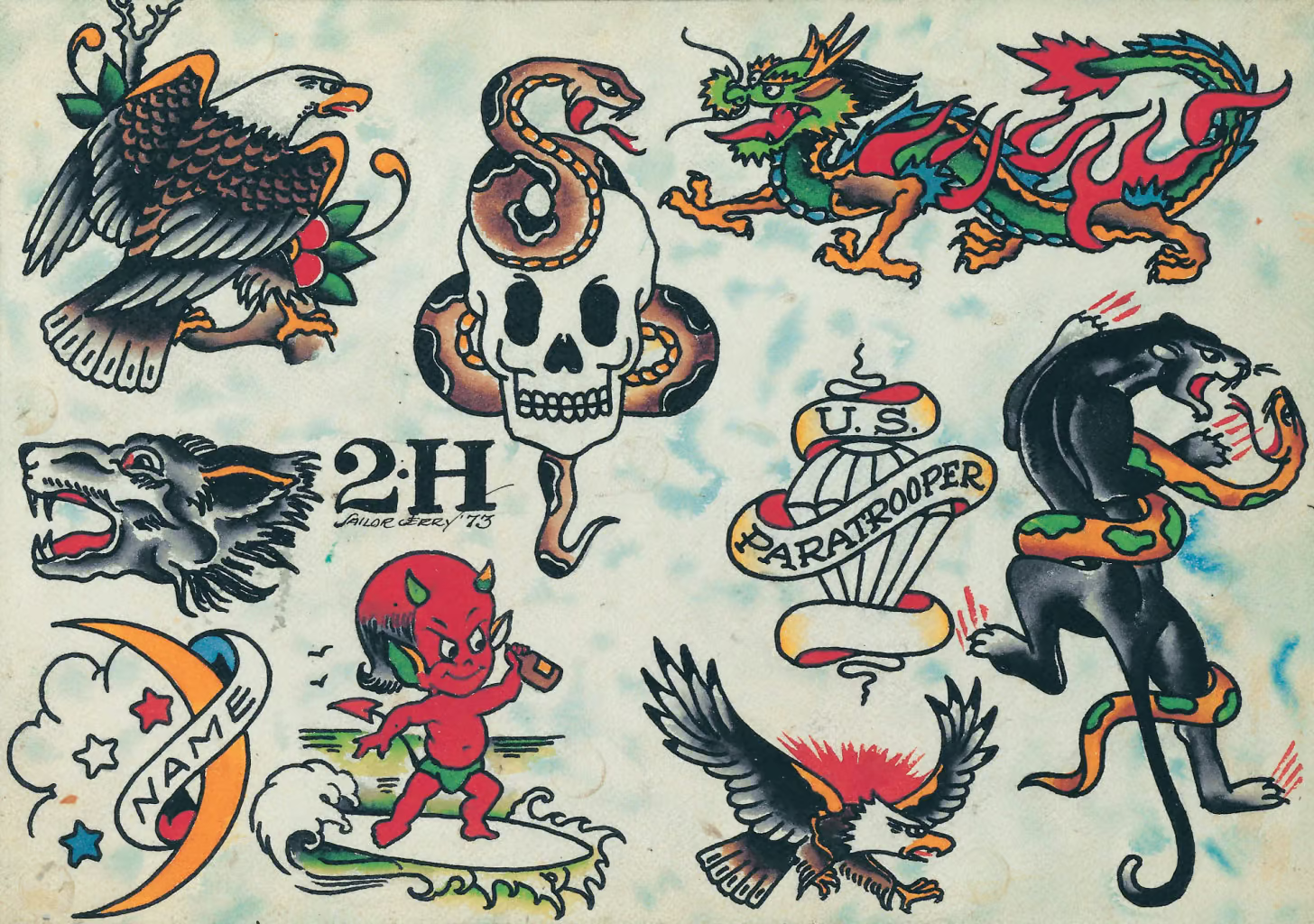
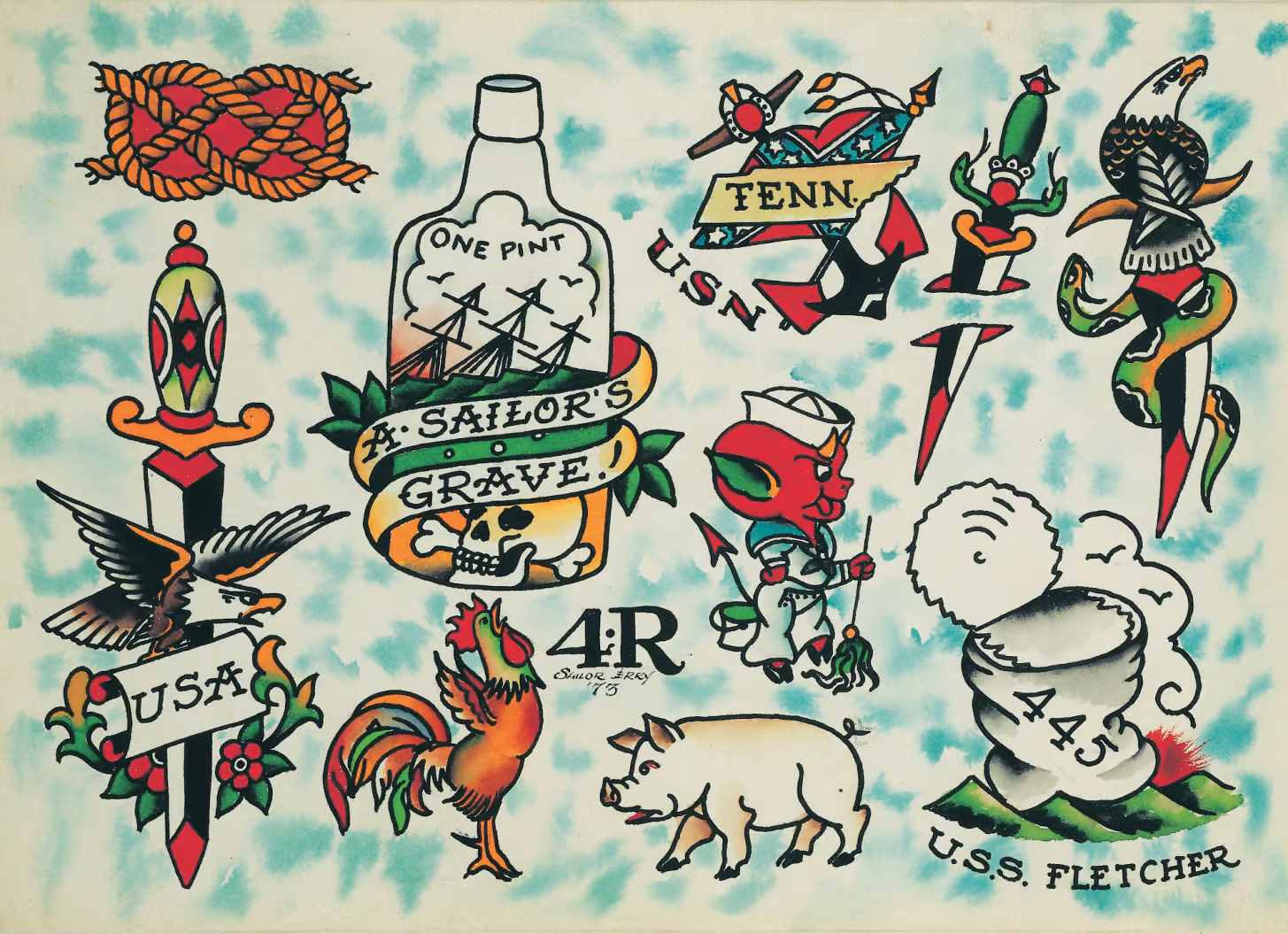
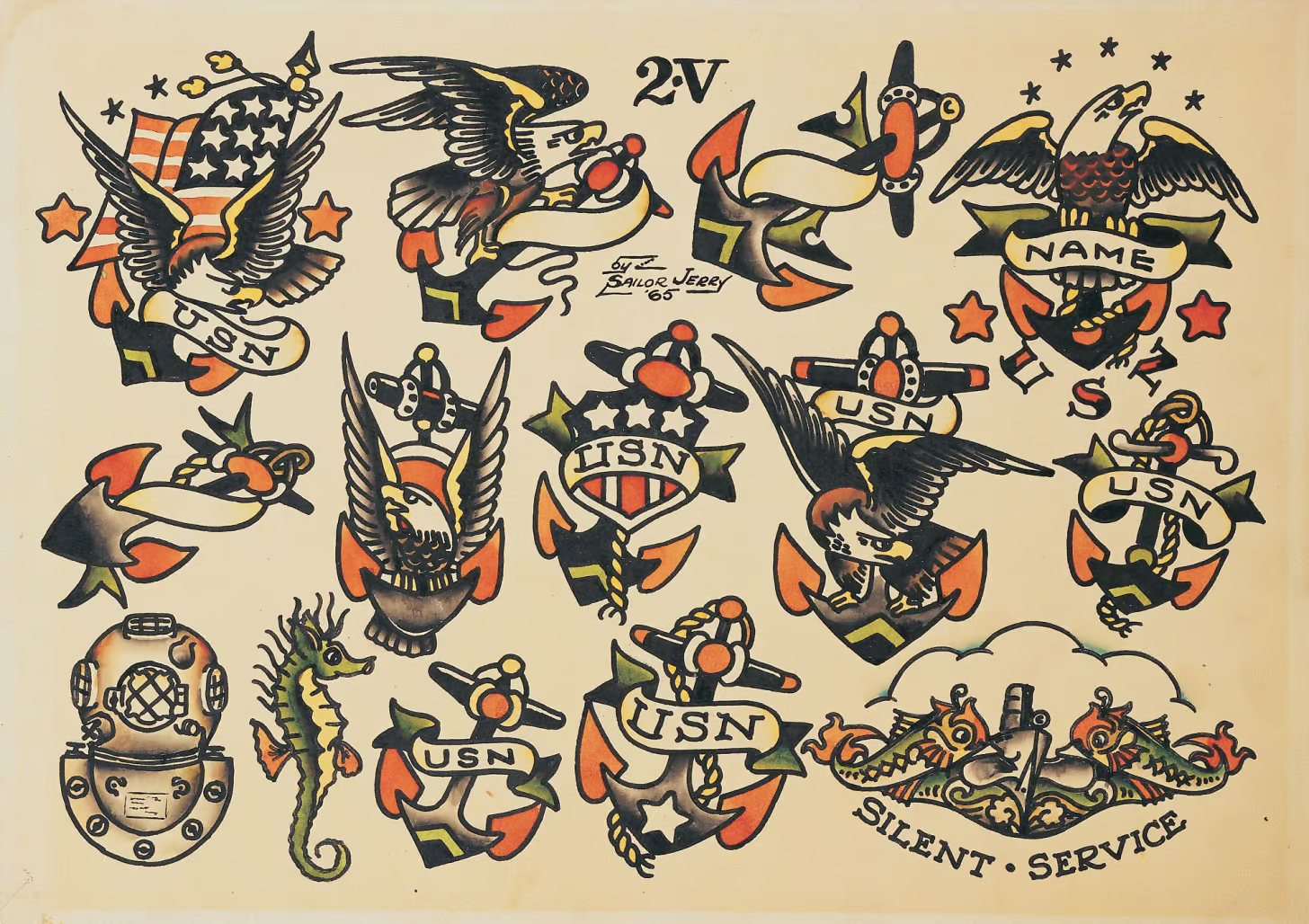
Collins’s reputation is built on flash — pre-drawn designs displayed on the shop wall for clients to choose from. Flash is not custom work; it is a system for producing consistent, legible tattoos quickly, which is exactly what a wartime tattoo shop needed when servicemen were lined up outside.
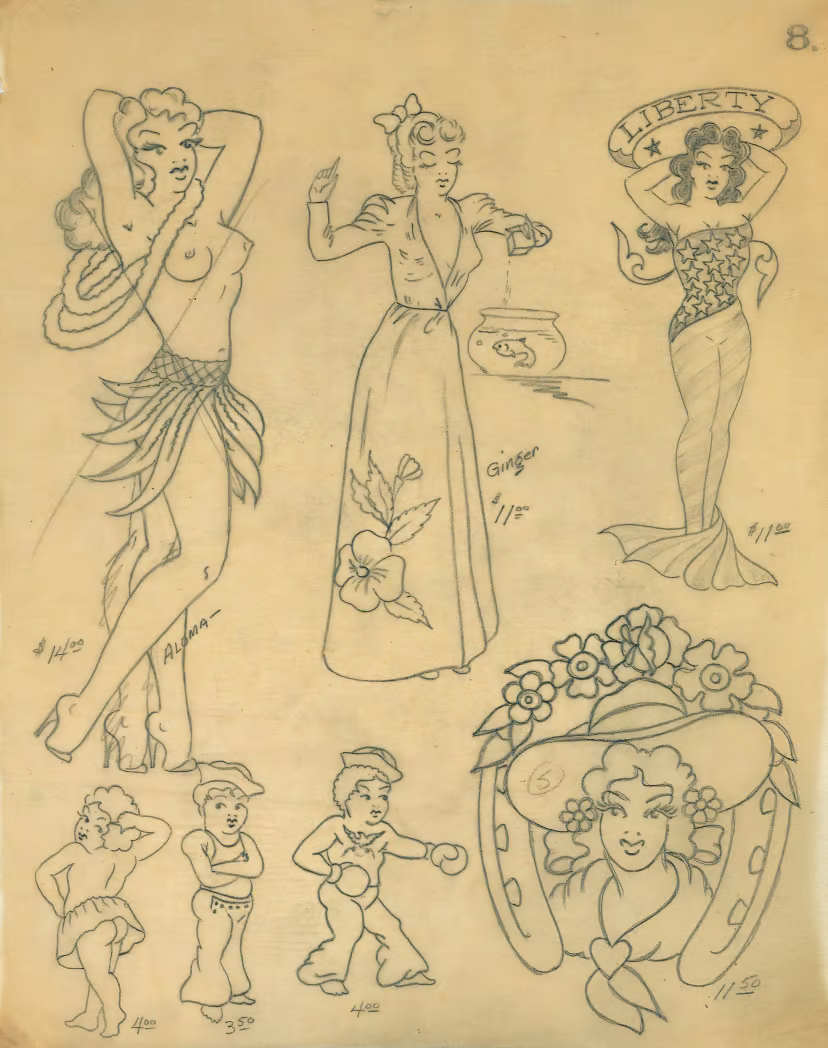
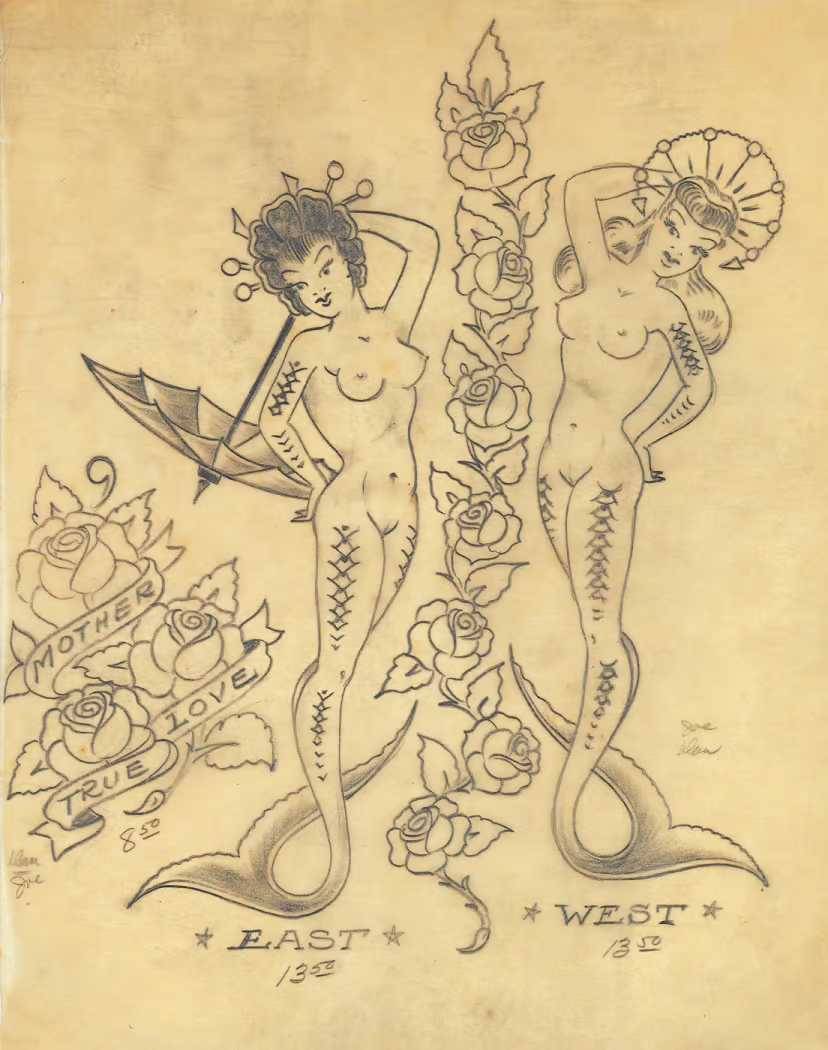
A conservation report from the Conservation Centre for Art & Historic Artefacts documents the scale of his surviving output: 26 original flash sheets, 148 acetate stencils, and 19 original drawings, all treated and housed for long-term preservation. That inventory matters because it shows physical production in volume, including intermediate artefacts — acetate stencils for transferring designs to skin — that demonstrate a working studio system rather than one-off illustration.
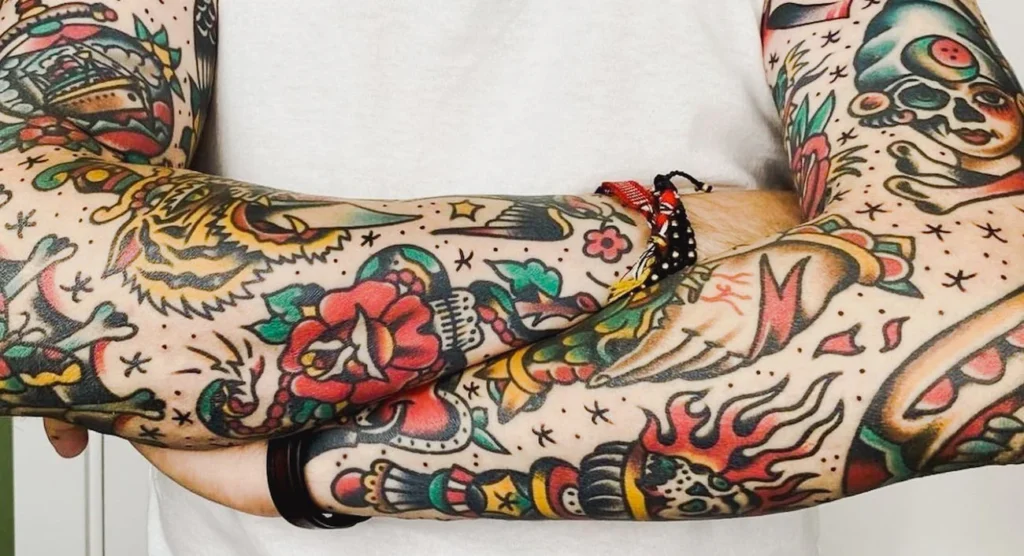
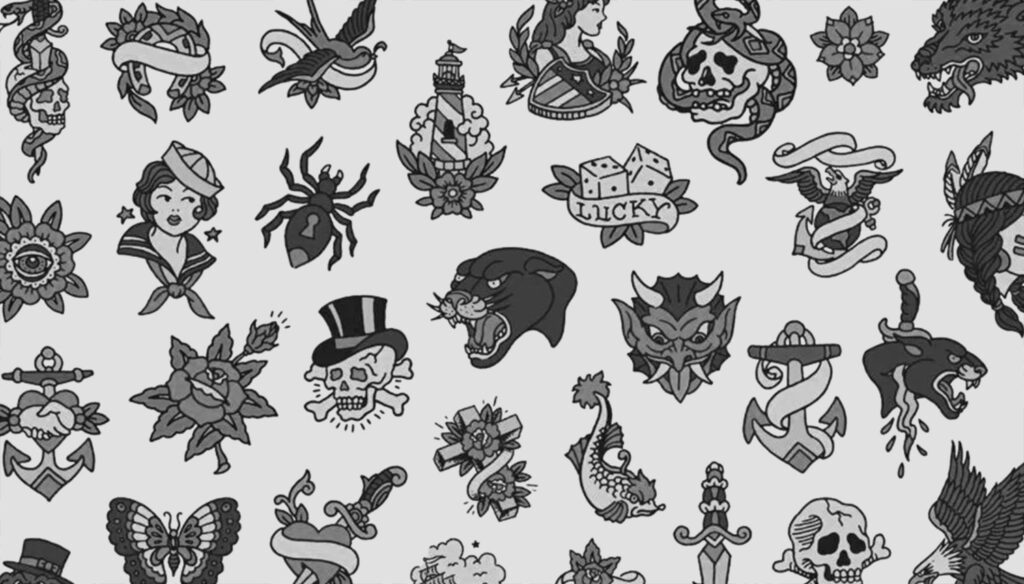
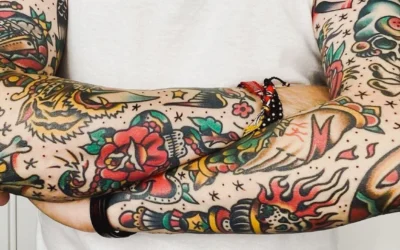
The motifs repeat with small variations: anchors, ships, swallows, nautical stars, eagles, flags, daggers, snakes, skulls, wildcats, roses, hearts with banners, pin-up girls, hula figures, and — increasingly — Japanese-influenced creatures like dragons. The design logic across all of them is consistent: a strong outer contour, a clear silhouette, limited internal detail, and bold colour. A Sailor Jerry tattoo is meant to read from across a room and hold up over decades on ageing skin. That is a technical constraint, not just an aesthetic preference.
Colour, needles, and the first purple ink
Collins was as much an engineer as an artist. The conservation report attributes three specific technical contributions to him:
- improved tattoo machine construction that enabled smoother operation and reduced pain;
- the invention (or early standardisation) of the “magnum” needle grouping for laying down broad strokes of colour;
- and the development of the first stable, non-toxic purple ink.
Before Collins, the standard tattoo palette was limited — black, red, green, and yellow. Purple was either fugitive (it faded) or toxic. He reportedly partnered with a manufacturer to create carbazole violet, a purple pigment that held. According to one account, he was so protective of it that he used it only on clients he considered worthy and swore them to secrecy about its source.
He also developed his own pigments more broadly, created needle configurations that caused less skin trauma, and was an early advocate of single-use needles and autoclave sterilisation. His business card’s “Clean Needles” claim is consistent with this. Whether he was literally the first to adopt these practices or among the first to standardise them is hard to prove — in a community where techniques spread by letters, trades, and apprenticeships rather than published papers, “invented” and “popularised” are nearly impossible to separate.
The Japanese connection
The most consequential thing Collins did, from the perspective of tattoo history, may have been opening a correspondence with Japanese tattoo masters — the “Horis,” an honorific meaning roughly “to carve.” Multiple sources describe him as the first Western tattooer to enter regular exchange of techniques and design tracings with Japanese practitioners, though “first” claims in tattoo history are always difficult to independently verify.
What is clear is that he studied Japanese tattoo composition seriously — the way large-scale work flows across the body, the relationship between foreground and background, the use of wind bars and wave patterns as connective tissue between focal images. He incorporated these principles into American flash, grafting Japanese compositional logic onto Western motifs. The result was a hybrid that expanded what American traditional tattooing could do without abandoning its core grammar of bold lines and flat colour.
As a tongue-in-cheek gesture, he gave himself the title “Hori Smoku” — a pun on how his Japanese colleagues pronounced “holy smoke.” The 2008 documentary about his life, Hori Smoku Sailor Jerry, takes its name from this joke.
Collins’s Japanese study had direct downstream consequences. Through his connections, his protégé, Don Ed Hardy, was introduced to the classical tattoo master Horihide and spent time working in Japan in the 1970s. Hardy went on to become arguably the most influential figure in the “tattoo renaissance” — the movement that pushed tattooing from folk-commercial practice toward fine-art ambition. That lineage runs straight through Sailor Jerry’s shop on Smith Street.
The protégés
Collins mentored three tattooers who carried his work forward: Don Ed Hardy, Mike “Rollo Banks” Malone, and Zeke Owen. The relationships were maintained largely through correspondence — Collins and Hardy exchanged letters and designs extensively. Hardy described Collins as “the premiere tattooer, the most talented guy in the world” and “the first of many renegade intellectuals in the business that I met. He didn’t have any formal schooling, but he was really brilliant and profound.”
Collins was also fiercely territorial about copying. He hated what he called “brain pickers” — tattooers who reproduced his designs without credit — and reportedly refused to do large-scale work on clients who wore tattoos from artists he didn’t respect. That possessiveness, ironically, would become the root of a legal battle that outlived him by decades.
Death and the shop
The name becomes a brand
What survives
The physical archive is split between institutional and corporate custody. The conservation treatment documented by CCAHA covers the core studio output — flash, stencils, and drawings. The Sammlung Zander in Cologne holds catalogued Collins works treated as collectable works on paper, with media, dimensions, and dates listed. William Grant & Sons, as brand owner, also holds letters and manuscripts from what it calls the “Sailor Jerry archives.”
Two published compilations are the main routes into his work for anyone who can’t access the originals. Sailor Jerry Collins, American Tattoo Master: In His Own Words, edited by Don Ed Hardy (Hardy Marks Publications), reproduces Collins’s letters and writings — the closest thing to hearing him speak. Sailor Jerry Tattoo Flash: Michael Malone Collection is a curated set of flash tied to the shop lineage through Malone.
The 2008 documentary Hori Smoku Sailor Jerry draws on interviews with Hardy, Malone, Owen, Lyle Tuttle, and others — the oral-history record of a world that communicated by letter and handshake rather than publication.
Collins’s flash appeared in the Tattoo exhibition developed by the Musée du Quai Branly in Paris and later shown at the Field Museum in Chicago — a large-scale museum show that treated tattooing as a serious historical and anthropological subject. His work was included in the section on Western tattooing as a representative nautical flash.
And every June in Honolulu’s Chinatown, the independently produced Sailor Jerry Festival celebrates his legacy with live music, art, film screenings, and tattoos available at the neighbourhood shops. The Collins family has attended. The festival is held around the anniversary of his death, a few blocks from the spot where he set up his machines and taped his flash to the wall — at 1033 Smith Street, in the district where servicemen came to get stewed, screwed, and tattooed, and where a stubborn man named after a mule made himself into the most consequential tattooer in American history.
Sources & further reading
- Norman Keith Collins memorial page. Veterans Legacy Memorial. U.S. Department of Veterans Affairs;
- Sheesley, Samantha. “True Love Forever: Preserving the Legacy of Norman ‘Sailor Jerry’ Collins.” AIC Book & Paper Group Annual, vol. 31 (2012).
- Lattanzio, Vince. “Saving ‘Sailor Jerry.’” The Philadelphia Inquirer, April 12, 2011.
- Sammlung Zander, Cologne. Catalogue entry for Sailor Jerry Collins.
- Invaluable (auction platform). Sailor Jerry Collins, Tattoo Artist, Oversized Business Card, ca. 1950.
- Morrow, Erich, dir. Hori Smoku Sailor Jerry: The Life of Norman K. Collins. 2008.
- Reyhan, Russ. Review of Hori Smoku Sailor Jerry. KQED Arts, 2008.
- Hardy, Don Ed, ed. Sailor Jerry Collins, American Tattoo Master: In His Own Words. Hardy Marks Publications, 2007.
- Malone, Michael, ed. Sailor Jerry Tattoo Flash: Michael Malone Collection. Hardy Marks Publications, 2001.
- Hardy, Don Ed. Interview by Catherine LaSota. “Tattoo Artist Don Ed Hardy on the Evolution of Tattoo Art in America.” Vice, July 28, 2024.
- Corcoran, Michael. “Stewed, Screwed & Tattooed: The Selling of Sailor Jerry.” MichaelCorcoran.net / Substack, published 2014, updated October 2021.
- Lyte, Brittany. “Widow Of Tattoo Legend ‘Sailor Jerry’ Sues Rum Distillers.” Honolulu Civil Beat, June 15, 2019.
- Hopkins, Alex. “William Grant defends ‘fair purchase’ of Sailor Jerry.” The Spirits Business, June 25, 2019.
- Davis Levin Livingston. Press release: “Davis Levin Livingston Represents Family of Tattoo Artist ‘Sailor Jerry’ in Unauthorised Use Lawsuit Against Sailor
- Jerry Spiced Rum.” PR Newswire, June 18, 2019.
- Tattoo Archive. “Norman Keith Collins.” Published 2002, updated 2017.
- Sailor Jerry and Don Ed Hardy on Wikipedia. The Free Wikipedia.
- Fawcett, Denby. “The Brothels of Chinatown.” Honolulu Civil Beat, March 2015.
- Sailor Jerry Ltd. / William Grant & Sons. Who is Sailor Jerry: About Norman Collins.